Hexmonger

A mech roguelite shooter

Tin Coffins

You are Talon-22, a combat clone printed this shift. Twenty-one of you didn’t come home.

Short, lethal squad fights through war-torn cities in a four-meter armored mech, against enemy squads that flank, suppress and hold the line. When you die, the war doesn’t rewind. The next you wakes up and keeps fighting.

  • In development
  • Windows · macOS · Linux
  • Coming to Steam
  • Full controller support
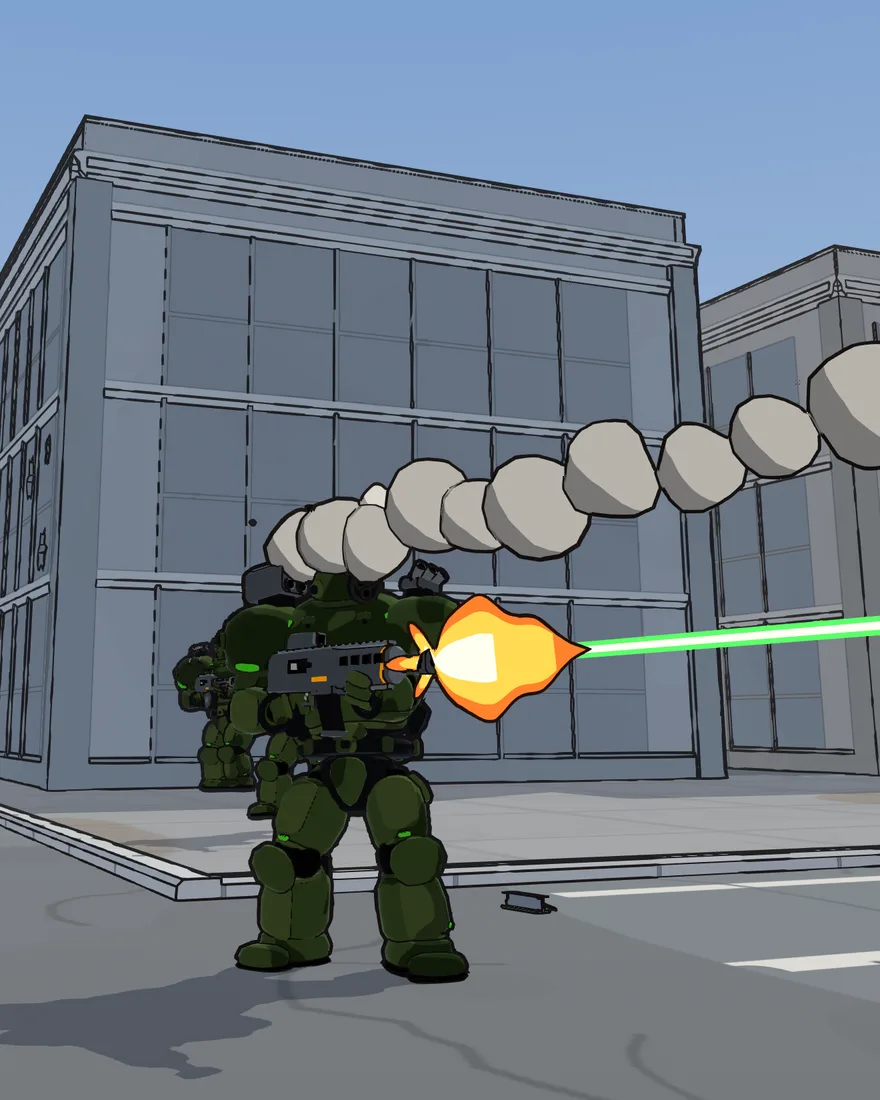
In-game: a green mech stands in a city street firing its autocannon in a burst of orange flame and a green tracer, while a rocket from its shoulder pod arcs away over the grey office blocks behind it on a trail of cartoon smoke.
Captured from the game: autocannon and rocket pod.

Wake protocol

Wake protocol — Line Talon, iteration 22.

You are a combat clone. Your body was printed this shift; your engram — reflexes, doctrine, the feel of the stick — was restored from the Talon template Command keeps on file.

What did not come back: your memories. Each iteration is scrubbed clean before it flies.

So the number on your hull is not a callsign. It is a version. You are Talon-22. There were 21 before you. They flew this same city. Most did not come home.

Deploy when ready, pilot.

The opening screen of a new campaign, word for word.

The war

Infantry in someone else’s war

You are not a god in a giant robot. You are a soldier in an armored suit, four meters tall and one bad decision from dead. Cover, sightlines and reload windows decide fights. Peek, fire, displace.

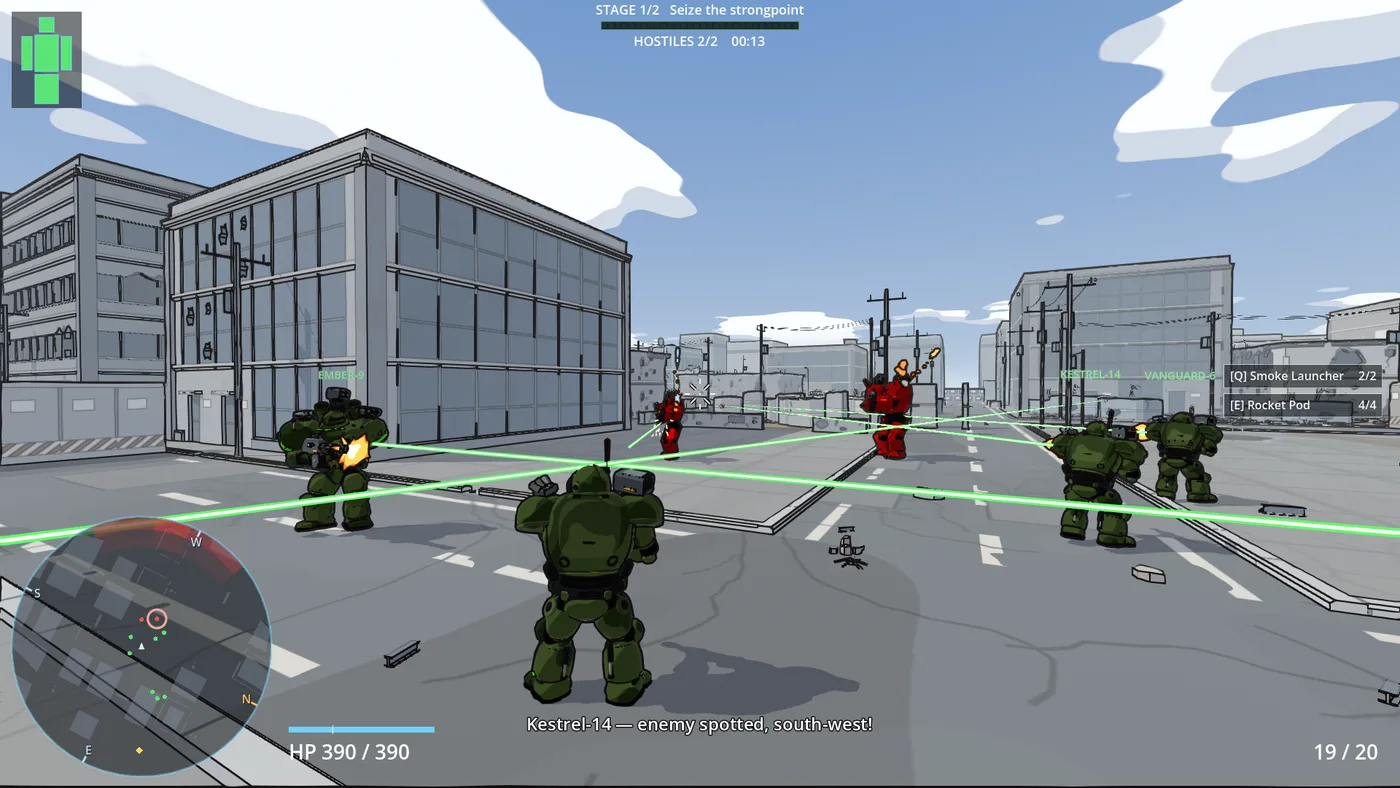
In-game, over the pilot’s shoulder with the full HUD: the squad spread across an intersection between grey office blocks, wingmates firing down the street at two red enemy mechs by a barricade, green tracers going out and a red one coming back, a radio subtitle reading “Vanguard — enemy spotted, east!”
First contact. Radar, ammunition and the radio along the bottom; the squad’s callsigns over their heads.
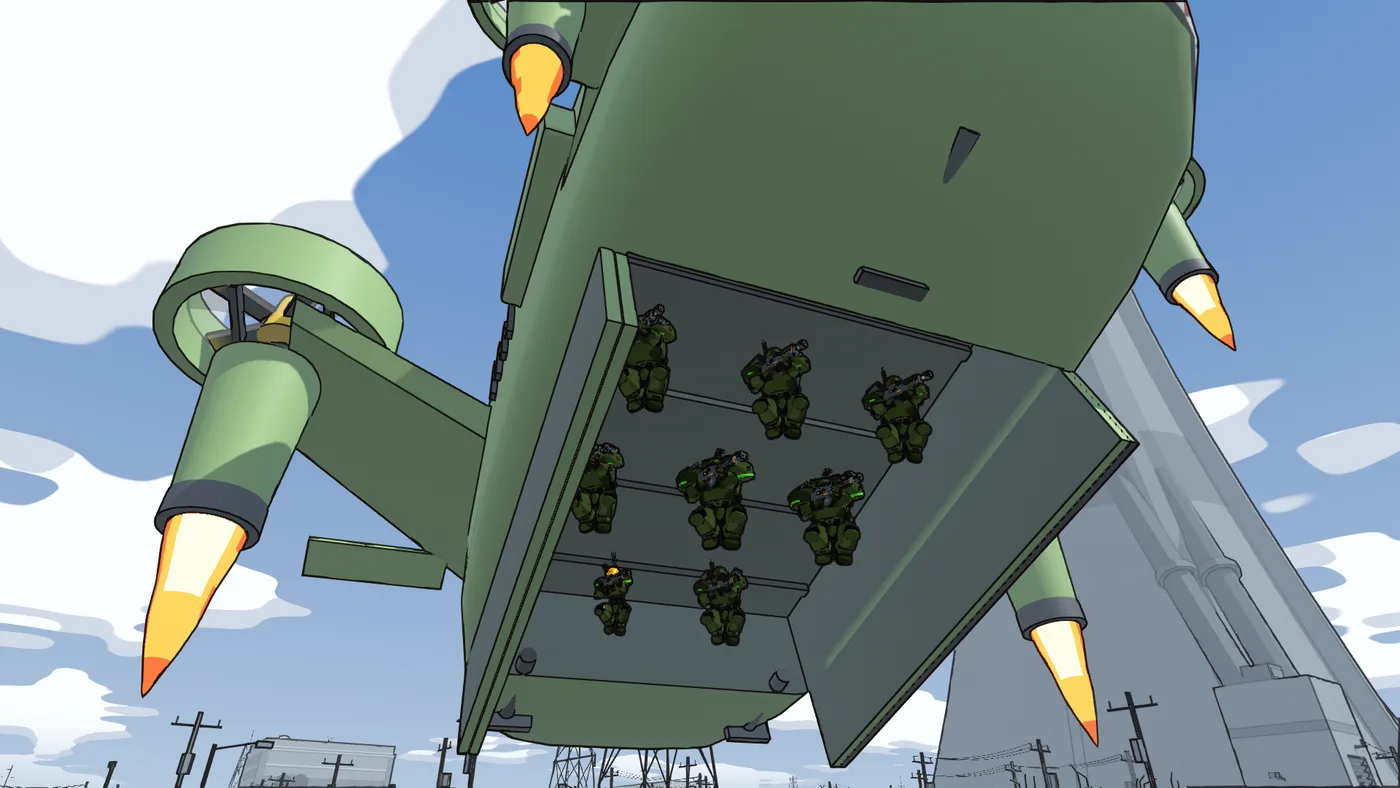
In-game: looking up at a dropship as it flares overhead, ducted fans tilted and jets lit, its belly doors open on the squad’s mechs racked inside.
Every sortie starts with a drop.
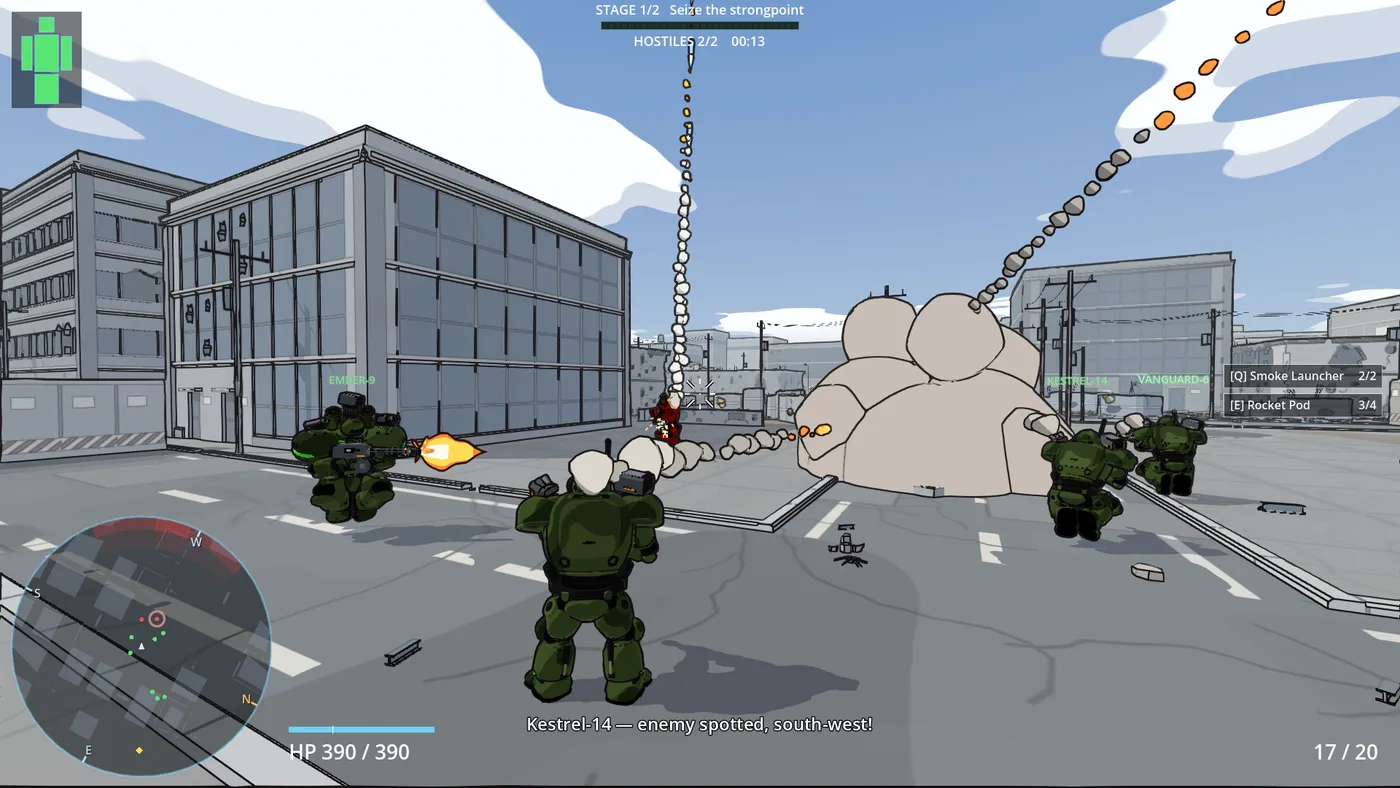
In-game: a smoke cloud has burst across the street where an enemy mech stood; the pilot’s rocket hits the other enemy in a shower of sparks while the squad fires on either side.
They pop smoke. You lose them.

Work in progressThe pictures on this page are captured from the current build. The mechs, the city and the sound are getting their final pass, and the pictures will be re-taken when they do.

Squads

They fight as a squad. So do you.

A commander and its pilots

  • Every enemy squad has a commander handing out roles — anchor, flank, suppress, overwatch, retreat — to pilots who decide for themselves when to peek, push, reload and fall back.
  • They only shoot at you when they can see you. Pop smoke and they lose you; break line of sight and they search where you were.
  • Rookies lose their nerve under fire and drop off comms. Veterans hold the order.

Three wingmates

  • Ping a target or a position, or open the comms radial: tag, flank left or right, overwatch, follow, disengage.
  • They answer on the radio and move, and they check their line of fire before they shoot. Friendly fire is real — check yours.
  • Lose an arm or your head and keep fighting. Lose your torso or your legs and you go down.
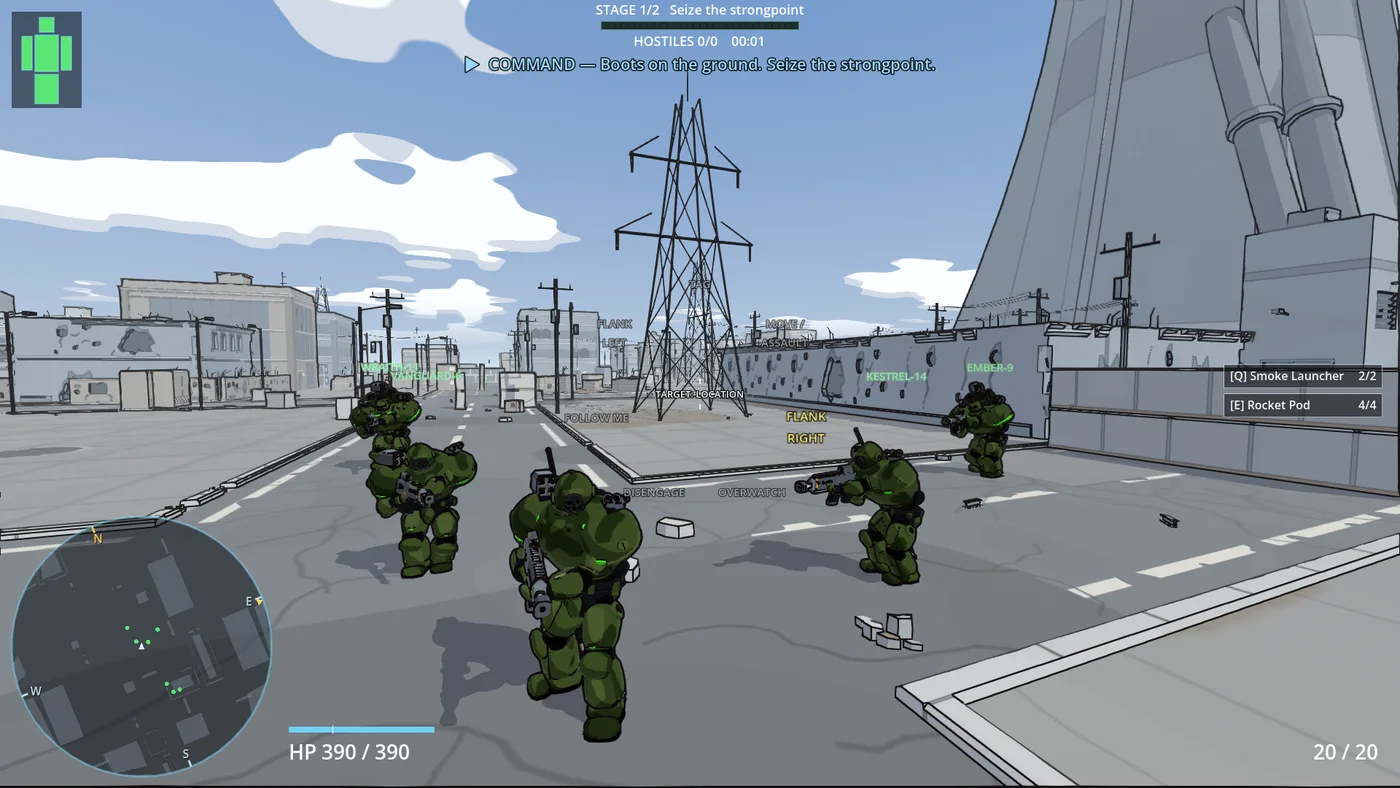
In-game: the comms radial open around the crosshair with its seven orders — Tag, Move/Assault, Flank Right highlighted in yellow, Overwatch, Disengage, Follow Me, Flank Left — and the squad standing either side of the pilot in the street.
Flank right, over the comms radial.
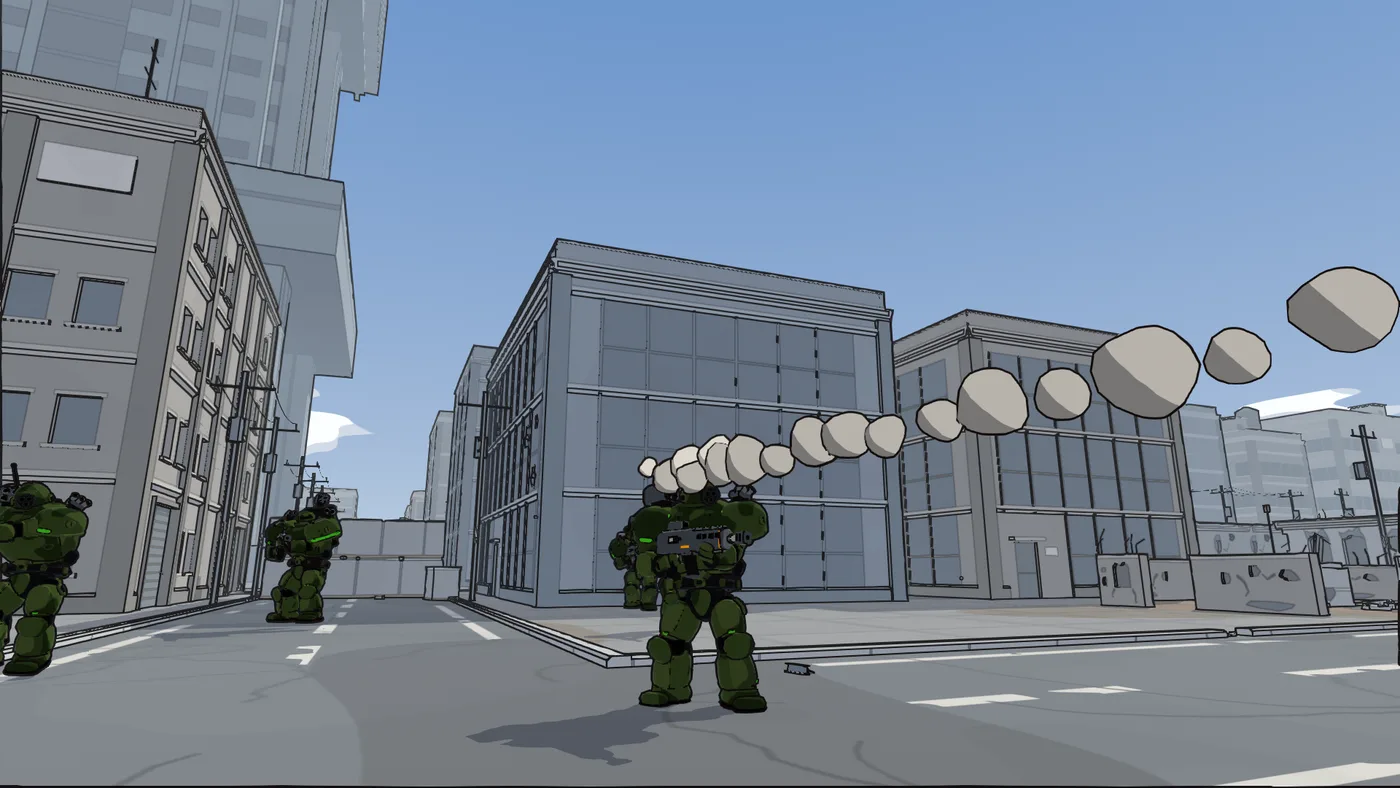
In-game: a mech faces the camera in a city street, a wingmate at its shoulder, a rocket arcing up and away from its shoulder pod on a smoke trail.
One primary, two shoulder hardpoints.

The campaign

One life. The war keeps the score.

A run is four sorties on one life, with no respawns. Purge, sabotage, extraction, seize and defense missions, and multi-stage operations that chain them — each fought in its own procedurally generated city, by day, at dusk, at night or under a toxic haze.

The front line moves with every sortie, across three acts that each end in a finale operation. Let it collapse and you hold the line. The salvage you bank buys weapons that outlast you; the casualty board keeps the names of the ones who didn’t.

After a sortie, open the Tactical Replay and scrub through the fight: what each enemy pilot knew about you against where you really were, and what their commander told them to do about it.


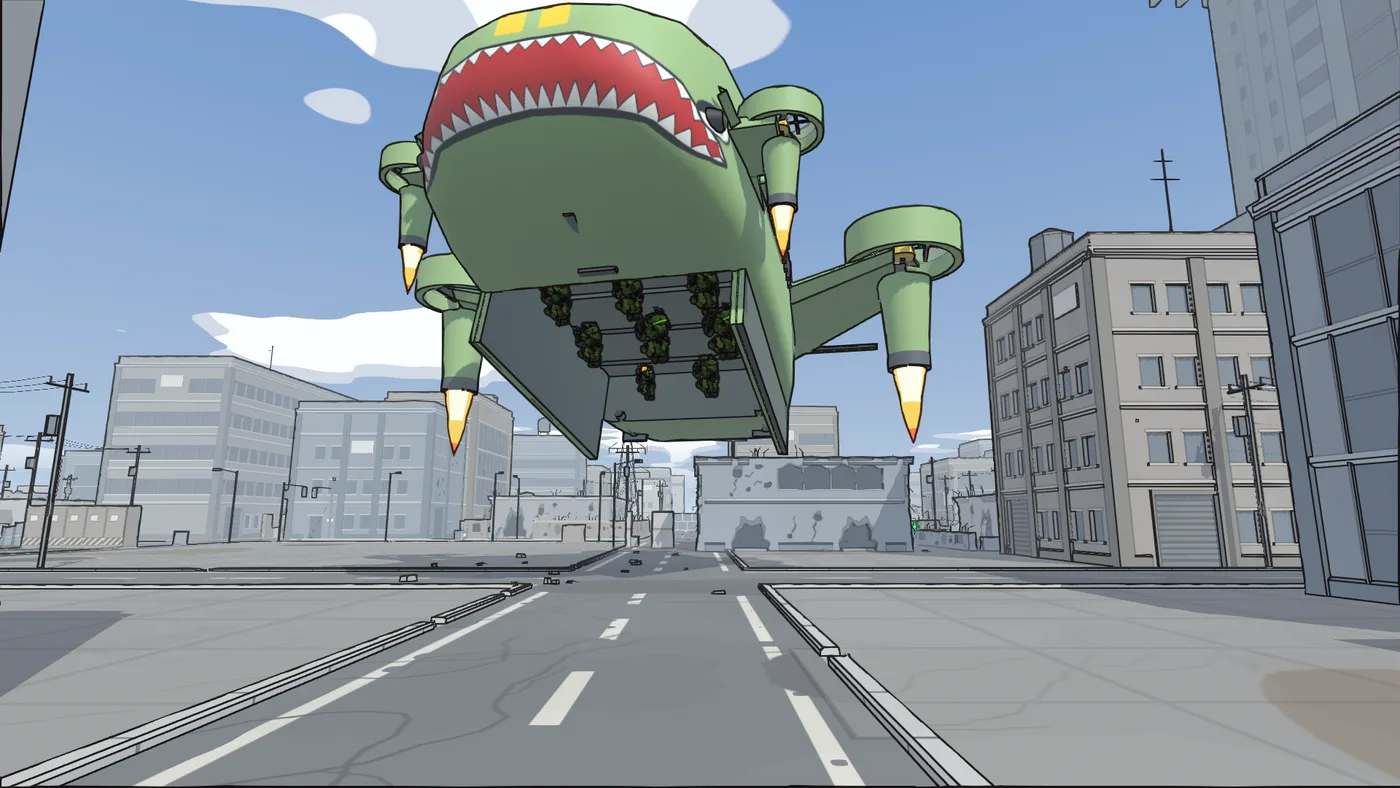
In-game, from street level: a shark-mouthed dropship comes in low over the intersection between office blocks, its bay open on the squad racked inside.

Echoes

Listen to yourself

The iterations before you learned to leave things in the world, off the route, where the scrub can’t reach: dead drops where earlier clones fell, and transmissions on a channel Command doesn’t log. The messages in your journal are from you. Follow them if you want to know why you keep waking up.

Combat EffectiveFirst sortie won. The line notices.
BenchmarkAn S-rated sortie. Somewhere, a threshold updates.
CalibratedNinety percent accuracy across a winning sortie.
No ContactA sortie won without taking a single hit.
The Line HeldA desperation operation, held.
Longevity ProtocolTen consecutive sorties survived on one iteration.

Eleven citations in all, each a Steam achievement. Every one reads as a commendation — until you know what the war is.

Expected December 2026

Report for deployment

Tin Coffins is coming to Steam for Windows, macOS and Linux, in English and Japanese. Wishlist it and Steam will tell you the day the drop goes green — and every wishlist helps a small studio’s game get seen.